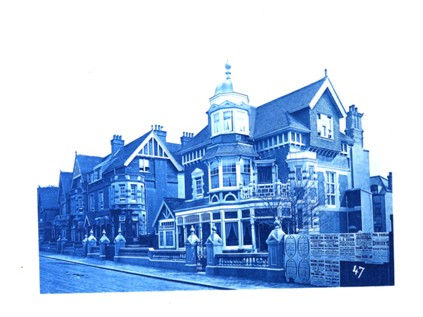
Find below the extracts from the letters Albert Levy wrote in the British Journal of Photography of 1895:
- Letter 1: pag 127.
-
VARIOUS TOPICS.
To the Editor.
•Sib, — Your valuable and always interesting British Journal of Photography comes to hand safely. However, it is cold outside, and very little chance just now of using the good ideas therein contained. I, there¬ fore, devote my time inside as much as possible to making a few trials and Improving my instruments for future use. I told you I made a light camera, and I have now added a dozen double dark slides made of the fame wood, which weigh four ounces each. I don’t think you can find many as light in the market, and yet they can be done easily.
I admire the way you go against firms which try to cheat people out of their money with pretended fine enlargements, to the great damage to the photographer generally. Sometimes you even go against people who are less harmful, such as that exhibition of colour photography ; but never mind, it is admitted that a Frenchman cannot do much when such a thing happens once in a long time ; some people know how to use the invention, however.
Please do not understand from above that I think you are wrong on that fraudulent enlarging firm ; on the contrary, you are right, and if I ■can help on the work I will do so at every chance. The same for some other firms.
Not long ago I saw in your Journal a most valuable invention for rapidly drying negatives. Splendid idea. I arranged my lathe in such a way that I could put a negative on it, and turn, turn, turn at the rate of at least one thousand (1000) turns a minute. I just wanted to see how much; that is, in how short a time I could dry a small 5x7 nega¬ tive. I turned the negative at the above rate for forty minutes, and it was about half dry. Next !
Here is my way of doing it more rapidly, and certainly less tiresome : In winter I set the negative on a drying rack on the floor near a stove, in summer in a draught in a warm place, or in the sunlight. I also avoid in so doing the possibility of enjoying the knocking off of a nail or finger joint.
Some time ago, maybe two or three years, I had a controversy with a friend in regard to the sensitiveness of plates. Was a plate more sensitive before development or during that operation? I said during. To set matters right I inquired from The British Journal of Photography, and the answer came, before development. For the time being I accepted it; however, I was pretty sure personally that it was during development. Why ? Because you read so often about covering the dish during development, which should not be so necessary if the sensitiveness was reduced as you say. Another reason for my saying it is that long ago (say fifteen years), when I made collodion emulsion for dry plate work, I used to advise, after trials I made, to flow the plate, previous to exposure, with the developer to obtain more rapidity and consequent sensitiveness. I think I even read not very long ago about fuming the plates before exposure, or flowing with some ingredient used in developing to the same effect. Is a plate more sensitive before development or during that operation ?
Some people like to see pictures very sharp and some others a little fuzzy. Here is a way to satisfy both. Take the negatives as sharp as possible to satisfy one kind, and then make with the camera a sharp posi¬ tive, from which in turn you can make a negative the same way, same size or enlarged, which will contain all the fuzziness desirable by focus¬ sing to that effect.
I wrote to you a few days ago asking you why I was unable to obtain a negative now, and since perhaps two years, of the same grey colour I used to have for over ten years previous, and as transparent. The nega¬ tives I get now are yellowish or pyro-stained, and harder to print than before. If I say two years, this includes summer and winter, so that your answer to above inquiry does not give the reason why ; besides, my de¬ veloper is, and always has been, one and the same since fully fifteen years, viz., pyro, bromide of ammonium, nitric acid, and ammonia, same proportions. Perhaps by asking further of your.numerous readers, some¬ thing more may be learned. Do the gelatine plates begin now to get into trouble the same as albumen paper ? Blisters were unknown in early days, but now they are common. I do not remember, in the begin¬ ning of gelatine dry plates, of any cleaning or clearing solutions being necessary, and it seems to me that this item has only been found neces¬ sary in the last two or three years, and not before. What is the reason for this ? Has pyro degenerated into a badly manufactured stuff, or is it the gelatine which ds of inferior quality ? I wish I had a plate several years old to be able to compare. Why does pyro developer stain now so easily that manufacturers have to give out with their notices or directions for use a clearing solution when they did not have to before ?-— I am, yours, &c., A. Levy.
Asnieres {Seine), February 16, 1895.
-
- Letter 2: pag 446
-
A GRUMBLE FROM PARIS.
To the Editor.
Sir, — Has it never struck you how easily some manufacturers of photographic materials find some one to defend them if something is found against their products, showing at once that the fault rests with the users, but never with themselves, while at other times their silence is painful to notice ? If it is for cardboard, usually the fault is on account of colours, or printing, or starch, even sometimes from the tongue of the operator. The cardboard itself is never to blame. If it is from readysenistised albumen paper, it is always the fault of the negative (too thin or too intense), or of the toning bath, or, maybe, the fixing. Another variety of reasons is found when blisters show, but the manufacturer is never ot blame. If it is for dry plates which show greasiness, as you found out lately, or different other spots, or why clearing solutions are needed now, and not a few years ago, a very curious silence follows ; but, if some amateur asks why he finds uneven developing, at once a defender comes and says that the remedy is a bath tub, or something like it, viz., two full inches deep of solution (for quarter or half-plates), and what more for curling of 12 x 10 plates ? fully six inches of developer, probably. Uneven flowing of emulsion by the manufacturer is out of the question, and yet I have found it to be pretty often the case.
To return to cardboard matters, I wrote to you some time ago about my experience with some turning quite yellow, leaving the photograph untouched. As regards paper ready-sensitised (albumen), I can speaK at some length, having had a good deal of experience with it. When I complain to the manufacturer, he is always quite astonished, as he never had any complaints of such a nature before, &c. — you probably know that story — but he is generally willing to make some of the loss good. Yet I have never been able to get any one to come and see me print, but I managed somehow to have them admit that something was the trouble, and it was laid on the weather’s fault. I printed from one and the same negative several prints, and marked on back good or bad, and sent them to the manufacturer to tone, and the result was exactly as marked, proving that thin or intense negative has very little to do with the result. I can prove this with any negative which is fit to print from. To any one accustomed to use such paper, it is easy to see beforehand the result of the toning. When complaining, the manufacturer never has any negative or printing frame, &c., at hand. It is easy then to just ask him simply for a small piece of paper, and expose it to light, and the result, to the experienced eye, can be followed, and, when you see & peculiar granulation appear, you can show it, and tell him that this piece will never give any good results in the shadows, nor in general appearance. Of course, I do not want to say that the fault always belongs to the manufacturer; but, if it only rests with him once out of ten times, it is quite enough for him to be a little more careful, and not come out with his little item that the users are always at fault, and try and mend, which very often means that he should stay with old formula?, and not try to improve, which, most of the time, means more profit to him, and consequently poorer material for the purchaser. — I am, yours, &c., A. Levy.
July 1, 1895.
-
- Letter 3: pag 495
-
FAULTY PLATES.
To the Editor,
Sir, — In answer to M. C. H. Hewitt’s letter in last number of The British Journal of Photography, “ Faulty Plates,” I suppose he does not expect an answer from the manufacturer any more than I do myself. As soon as you put their nose into one of their own faults or defects, they are as silent as a dead fish. The trouble Mr. H. C. H. had with one dozen of 10 x 8 plates I had myself, with a quantity of dozens of the same size, and I ascribed it to a defect in the drying of the plates. When a negative, after washing, is put on a drying rack, and then reversed when only half dry, the same effect will appear.
At that time I ordered twenty-four dozen of plates, but wanted two dozen first as trial. The two dozen arrived and showed the defect, and I refused the others, but asked the manufacturer (a very well-known and old-established London firm) to send me other plates without the mark¬ ings. This was cheerfully admitted, and, in due time, I received the twenty-four dozen of 10 x 8 plates, paid for them, and found when using them that three-quarter of the lot had the markings. What could I do then? Grumble ! — I am, yours, Ac. A. Levy.
Asnieres (Seine), July 19, 1895.
-